Tuesday, 15 July 2014

Iceland - Þingvellir National Park


Þingvellir (Thingvellir) is the National Park where the Althing, an open-air assembly representing the whole of Iceland, was established in 930 and continued to meet until 1798. Over two weeks a year, the assembly set laws - seen as a covenant between free men - and settled disputes. The Althing has deep historical and symbolic associations for the people of Iceland. The property includes the Þingvellir National Park and the remains of the Althing itself: fragments of around 50 booths built from turf and stone. Remains from the 10th century are thought to be buried underground. The site also includes remains of agricultural use from the 18th and 19th centuries. The park shows evidence of the way the landscape was husbanded over 1,000 years.

India - Red Fort Complex


The Red Fort Complex was built as the palace fort of Shahjahanabad – the new capital of the fifth Mughal Emperor of India, Shah Jahan. Named for its massive enclosing walls of red sandstone, it is adjacent to an older fort, the Salimgarh, built by Islam Shah Suri in 1546, with which it forms the Red Fort Complex. The private apartments consist of a row of pavilions connected by a continuous water channel, known as the Nahr-i-Behisht (Stream of Paradise). The Red Fort is considered to represent the zenith of Mughal creativity which, under the Shah Jahan, was brought to a new level of refinement. The planning of the palace is based on Islamic prototypes, but each pavilion reveals architectural elements typical of Mughal building, reflecting a fusion of Persian, Timurid and Hindu traditions The Red Fort’s innovative planning and architectural style, including the garden design, strongly influenced later buildings and gardens in Rajasthan, Delhi, Agra and further afield.

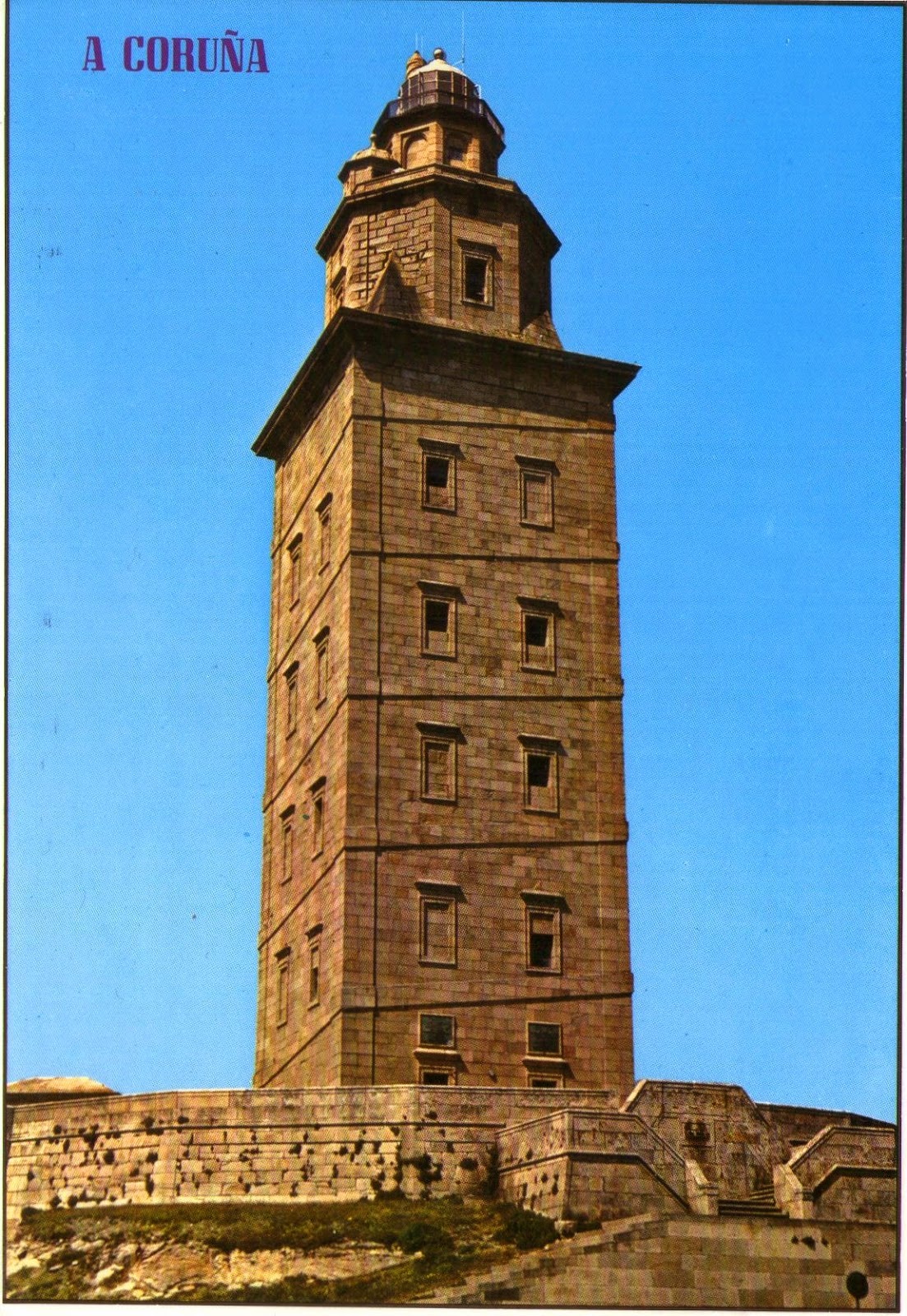
Spain - Tower of Hercules


The Tower of Hercules has served as a lighthouse and landmark at the entrance of La Coruña harbour in north-western Spain since the late 1st century A.D. when the Romans built the Farum Brigantium. The Tower, built on a 57 metre high rock, rises a further 55 metres, of which 34 metres correspond to the Roman masonry and 21 meters to the restoration directed by architect Eustaquio Giannini in the 18th century, who augmented the Roman core with two octagonal forms. Immediately adjacent to the base of the Tower, is a small rectangular Roman building. The site also features a sculpture park, the Monte dos Bicos rock carvings from the Iron Age and a Muslim cemetery. The Roman foundations of the building were revealed in excavations conducted in the 1990s. Many legends from the Middle Ages to the 19th century surround the Tower of Hercules, which is unique as it is the only lighthouse of Greco-Roman antiquity to have retained a measure of structural integrity and functional continuity.

Italy - Cathedral, Torre Civica and Piazza Grande, Modena


The magnificent 12th-century cathedral at Modena, the work of two great artists (Lanfranco and Wiligelmus), is a supreme example of early Romanesque art. With its piazza and soaring tower, it testifies to the faith of its builders and the power of the Canossa dynasty who commissioned it.

Italy - Castel del Monte


When the Emperor Frederick II built this castle near Bari in the 13th century, he imbued it with symbolic significance, as reflected in the location, the mathematical and astronomical precision of the layout and the perfectly regular shape. A unique piece of medieval military architecture, Castel del Monte is a successful blend of elements from classical antiquity, the Islamic Orient and north European Cistercian Gothic.

U.S.A. - Yellowstone National Park


The vast natural forest of Yellowstone National Park covers nearly 9,000 km2 ; 96% of the park lies in Wyoming, 3% in Montana and 1% in Idaho. Yellowstone contains half of all the world's known geothermal features, with more than 10,000 examples. It also has the world's largest concentration of geysers (more than 300 geyers, or two thirds of all those on the planet). Established in 1872, Yellowstone is equally known for its wildlife, such as grizzly bears, wolves, bison and wapitis.

Greece - Medieval City of Rhodes


The Order of St John of Jerusalem occupied Rhodes from 1309 to 1523 and set about transforming the city into a stronghold. It subsequently came under Turkish and Italian rule. With the Palace of the Grand Masters, the Great Hospital and the Street of the Knights, the Upper Town is one of the most beautiful urban ensembles of the Gothic period. In the Lower Town, Gothic architecture coexists with mosques, public baths and other buildings dating from the Ottoman period.